- (€) EUR
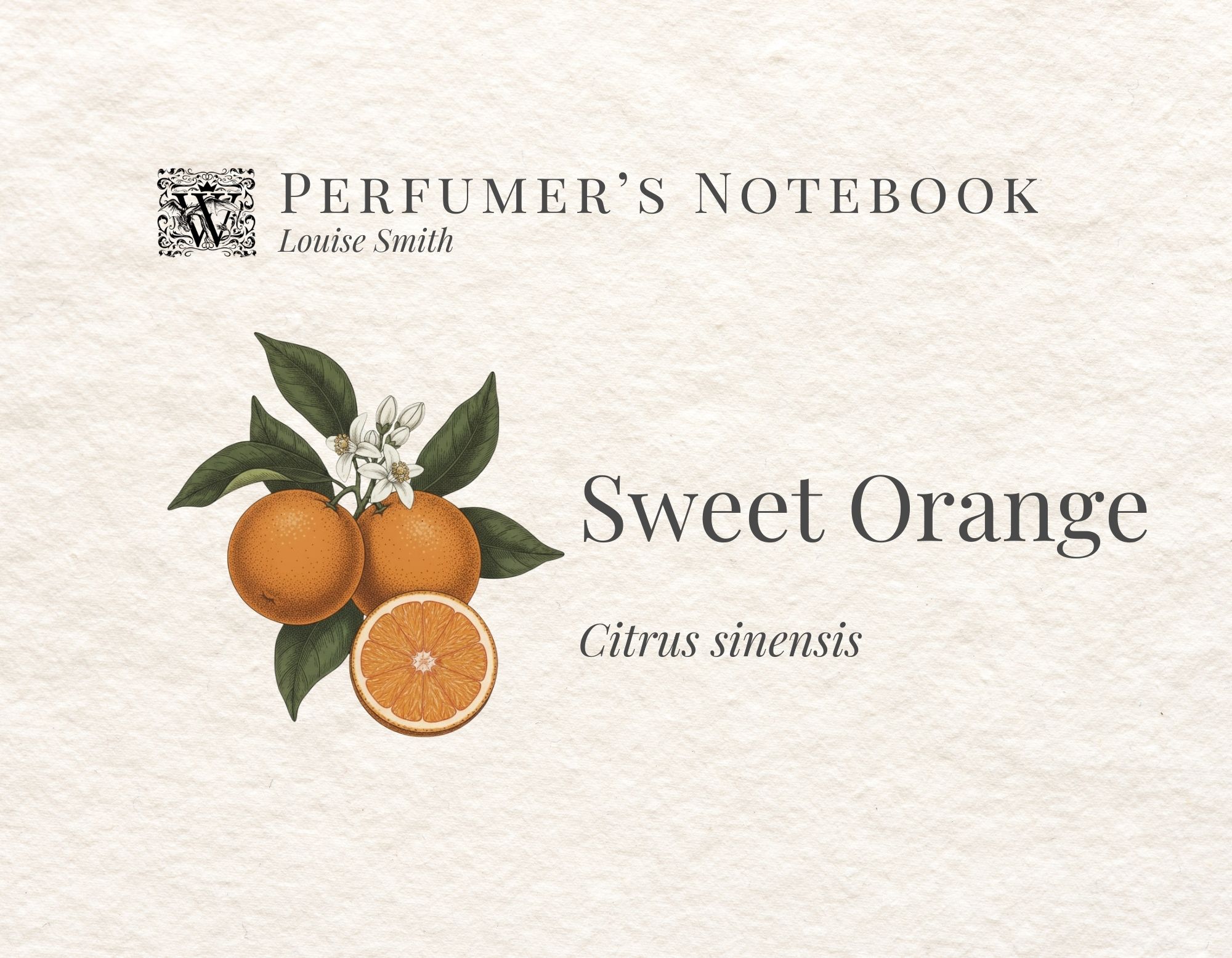
Sweet Orange in Niche Perfumery: The Perfumers Notebook
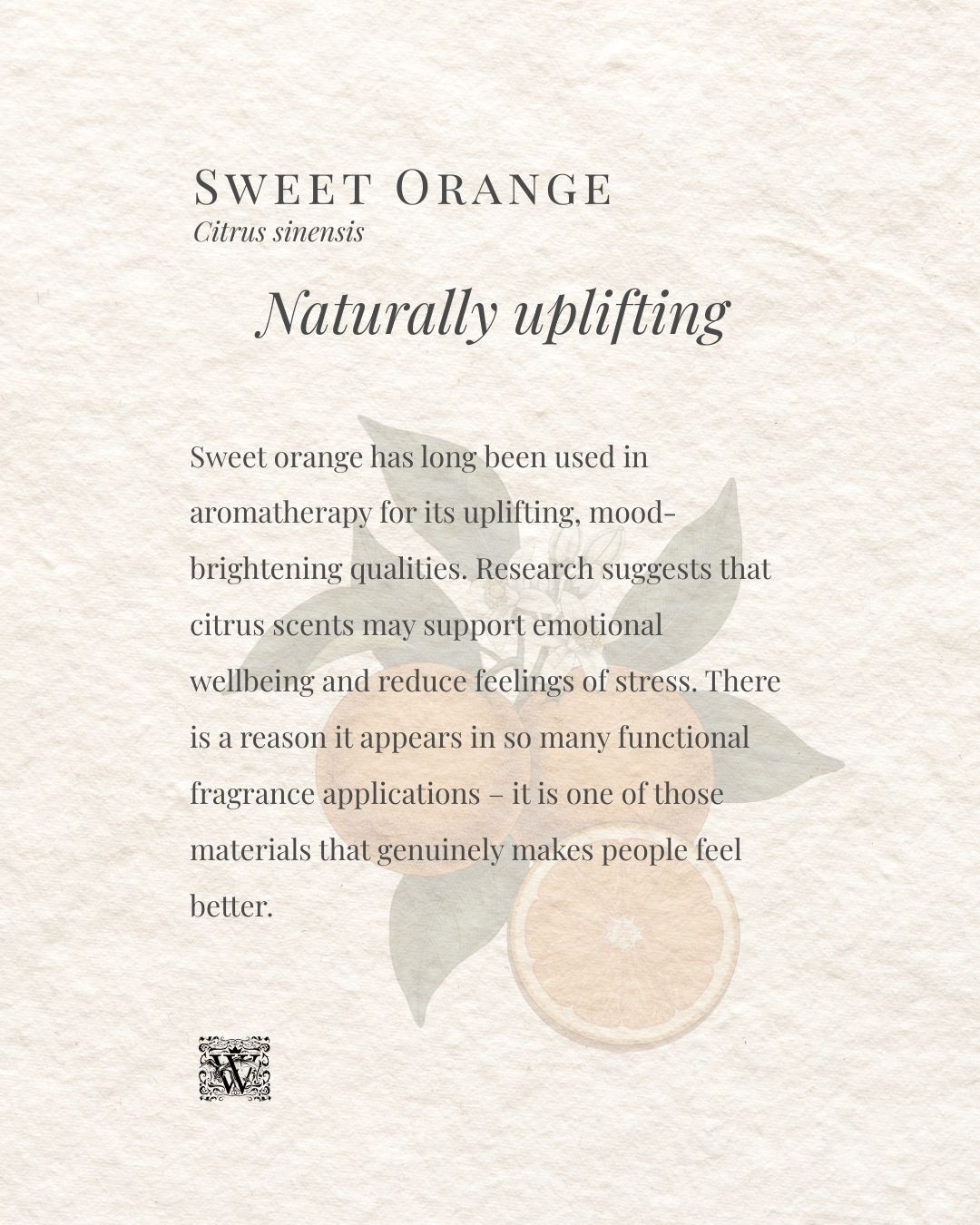
There are ingredients that take years to fall in love with, and there are ingredients that get you immediately. Sweet orange is firmly in the second camp. Fresh, sparkly, joyful and just a little bit edible, it is one of the most instantly recognisable scents in perfumery, and one of the most widely used. It appears in fine fragrance, functional fragrance, home scenting, aromatherapy; it is, in every sense, everywhere. And yet in the right hands, it still has the ability to feel special.
At a glance: Sweet Orange in Niche Perfumery
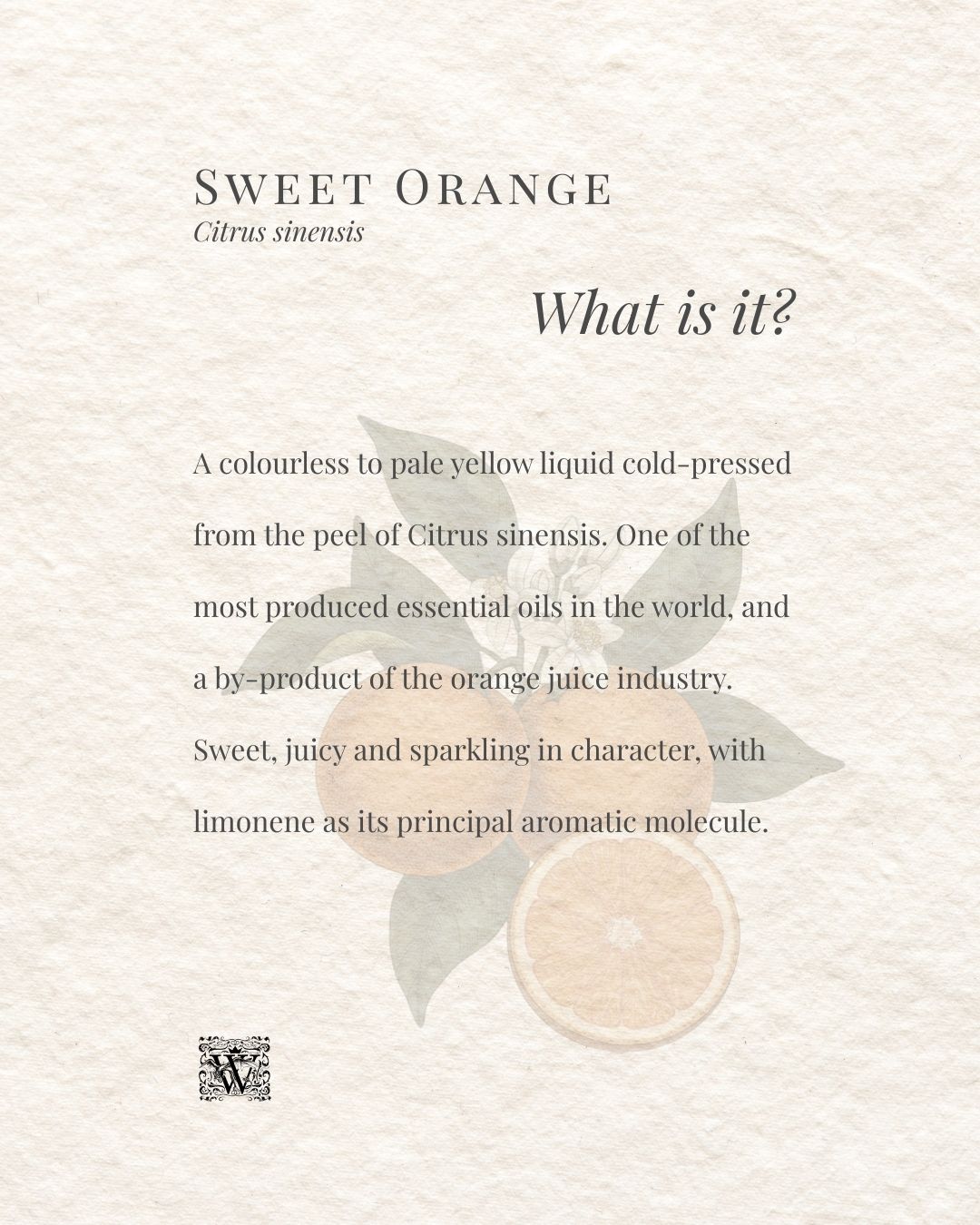
- The cold-pressed essential oil of Citrus sinensis peel, and one of the most widely produced natural aromatic materials in the world — largely as a by-product of the juice industry
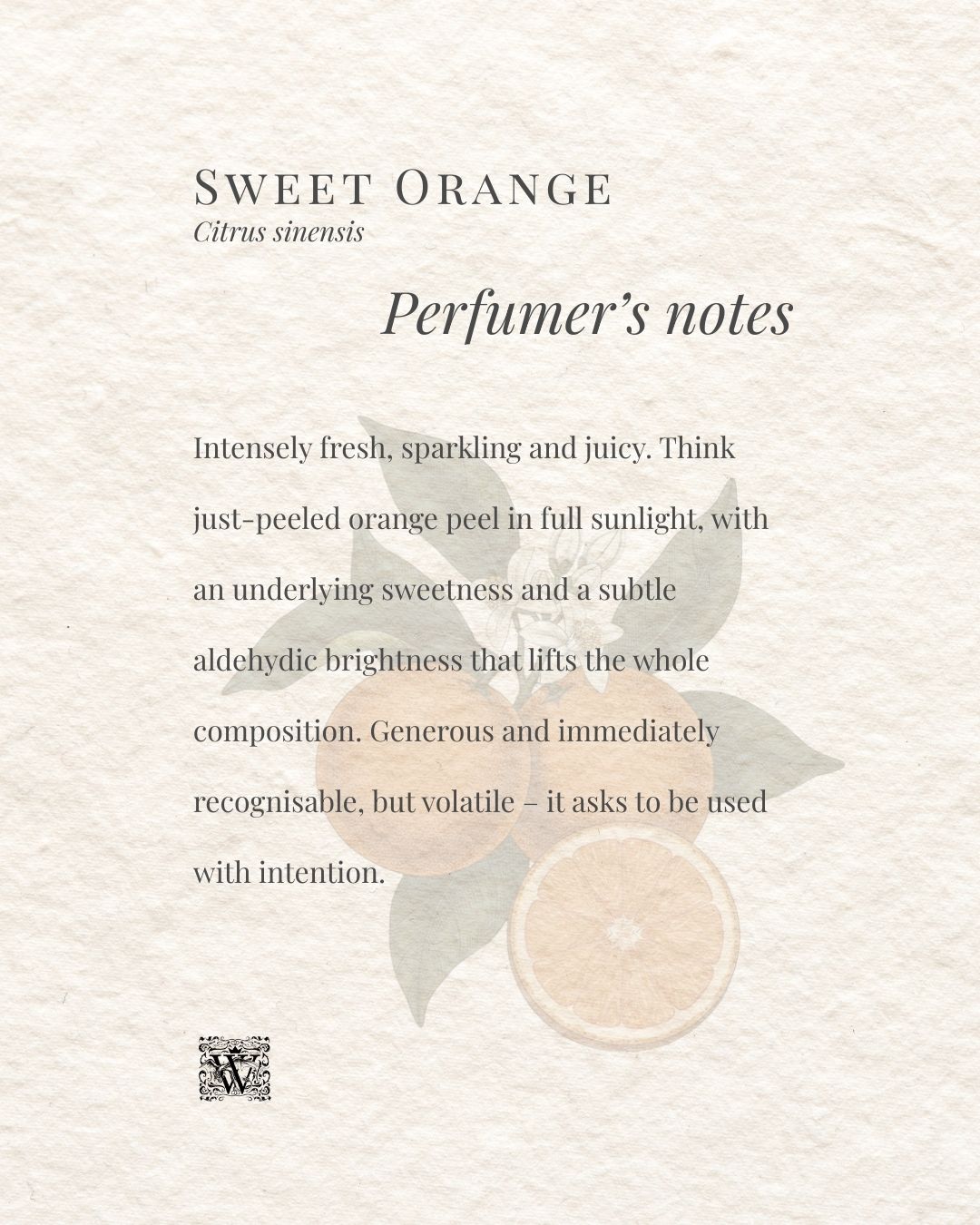
- Smells intensely fresh, juicy and sparkling: think just-peeled orange peel, sunlit and sweet, with a subtle aldehydic lift that gives it its characteristic mouth-watering quality
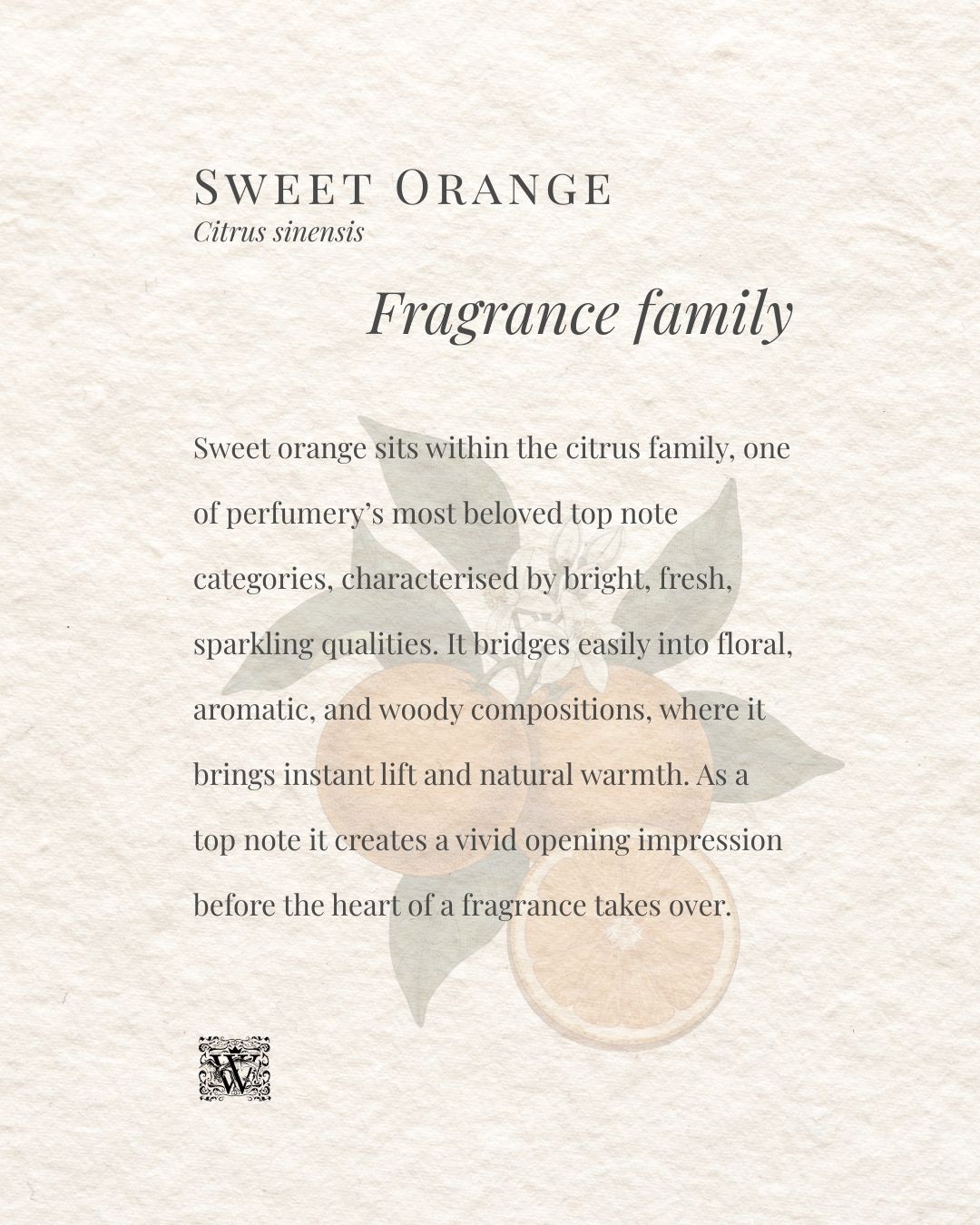
- Works as a top note, creating an immediate burst of brightness on application; vivid and cheerful, though volatile by nature and one of the first notes to fade
- Pairs beautifully with white florals, spices, woody materials, vetiver, and other citrus notes; a generous, versatile material at home in everything from colognes to modern niche compositions
- Dominated by limonene, which accounts for well over 90% of the oil; the remaining aldehydes including octanal and decanal carry much of the rounded, recognisably “orange” character
- Used by Louise in Coast, where its sparkly, fresh brightness sits at the heart of the citrus opening alongside bergamot, lemon, mandarin, and lime
What is Sweet Orange?
Sweet orange is the essential oil cold-pressed from the peel of Citrus sinensis, the familiar orange you will find in any fruit bowl or glass of juice. The oil is a by-product of the juice industry, which is part of why it is so widely available and relatively affordable; those enormous tonnages of juice processing generate an impressive volume of fragrant peel. The oil itself is a pale yellow liquid with that immediately recognisable bright, juicy, sparkling character.
The principal aromatic molecule in sweet orange is limonene, which accounts for well over 90% of the oil’s composition and gives all citrus fruits their characteristic fresh, sweet brightness. The remaining fraction includes myrcene, alpha-pinene, and a small but significant group of aliphatic aldehydes – including octanal and decanal – which, despite being present in tiny quantities, are the compounds that give orange oil its more rounded, complex, “orange-y” quality beyond the sheer citrus hit.
This is something I find genuinely fascinating from a perfumery perspective: limonene is the dominant molecule, but it is those minor aldehydes that arguably carry most of what we recognise as orange. A good quality sweet orange oil, freshly cold-pressed, has a mouth-watering, almost edible quality that goes a little beyond what you might expect from something that is almost entirely one compound.
How I Use Sweet Orange in Niche Perfumery
Sweet orange is prized for its immediate, joyful sparkle. It is a top note – one of the first things you smell when you apply a fragrance, and also one of the first to fade. This is not a flaw; it is simply the nature of lighter volatile molecules, and understanding it is part of the craft of working with citrus materials.
The challenge with sweet orange in a fine fragrance context is longevity. It is bright and vivid on first application, but it can disappear within the first hour, sometimes sooner. Perfumers work around this in a number of ways: by using it generously to create a strong initial impact, by pairing it with materials that carry its character forwards into the mid notes, or by using a deterpenated version of the oil, which concentrates the heavier, more persistent aromatic components and gives improved stability in the bottle.
Limonene is also worth mentioning here because it is classified as an allergen under European cosmetic regulations, which means it must be declared on ingredient labels above certain thresholds. This is something any perfumer working with natural citrus materials navigates as a matter of course.
When sweet orange works, it really works. It is one of those top notes that brings an entire fragrance to life before the heart has even begun to develop. It is the note that makes someone smile when they first apply a scent.
Pairing and Composition: Sweet Orange
Sweet orange is a generous team player. It pairs beautifully with floral materials, particularly white florals like jasmine, neroli and orange blossom, where its juiciness adds a sunlit quality to the flower. It works wonderfully with spices, woody materials, and resins, where its brightness provides contrast and lift. It is also naturally sympathetic to other citrus materials and green notes, where it sits as part of a fresh, sparkling opening accord.
It is particularly lovely paired with vetiver, where the sweetness of the orange and the dry earthiness of the root create something surprisingly complex. It also has a long history in chypre and cologne-style compositions, where its role is to provide that initial burst of freshness before deeper materials take over.
In functional fragrance and home scenting it is used liberally, and with good reason: it is a mood-lifting, accessible, crowd-pleasing material that works across almost any context.
Sweet Orange at Wales Perfumery
I use sweet orange in Coast, where its sparkly, fresh character sits perfectly alongside the citrus opening of lemon, mandarin, bergamot, and lime. It contributes to that immediate sense of brightness you get on application – the feeling of standing somewhere open and breezy with the light on the water.
It is a material I return to often, because its honesty and warmth are genuinely hard to replicate. There is something about sweet orange that simply does not need to justify itself. It is cheerful and direct and immediately recognisable, and when you use it well, it is the note people reach for without quite knowing why.
The Sweet Orange Difference
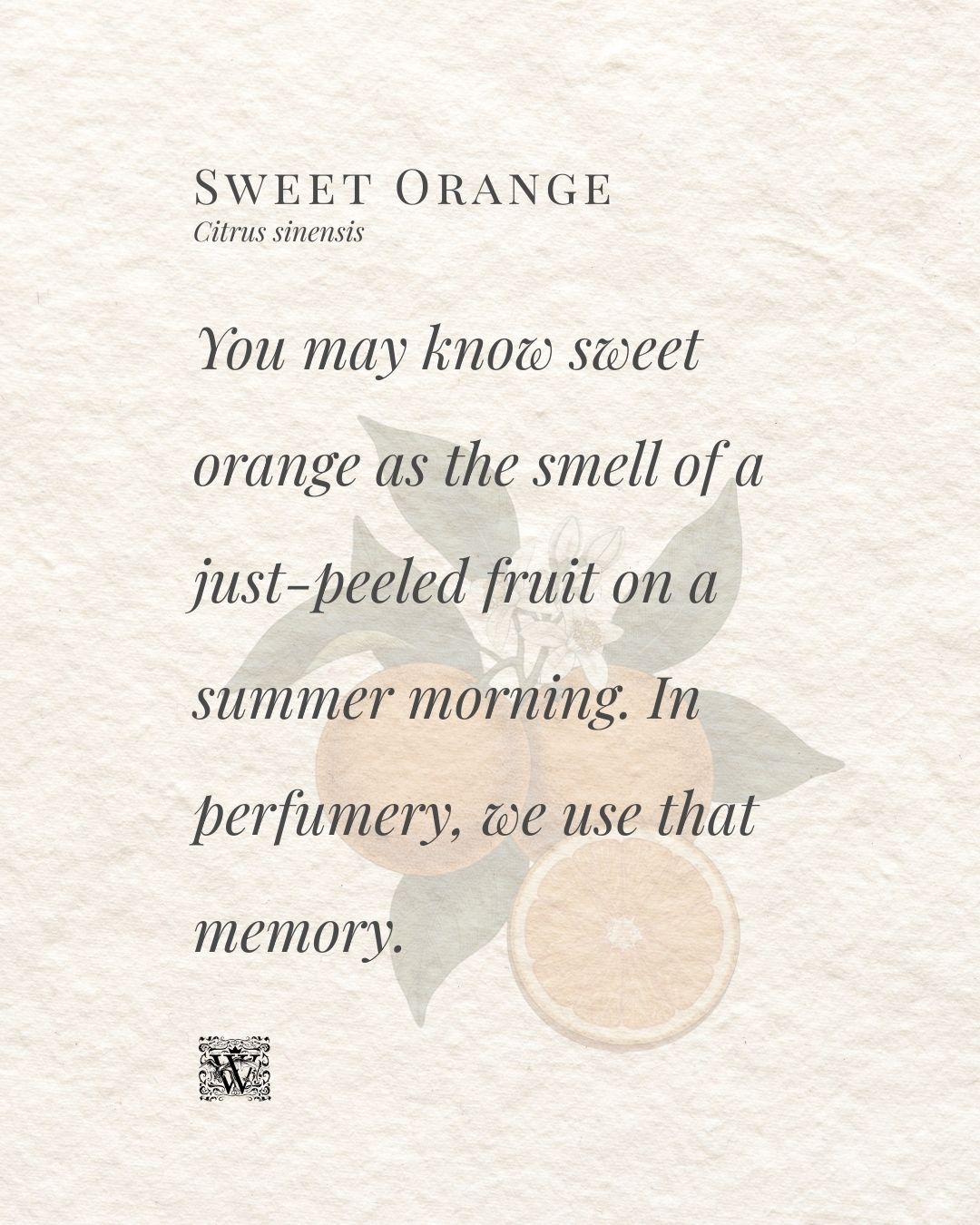
You may already know sweet orange as the smell of a just-peeled fruit on a summer morning, even if you have never known it by name. That is the thing about perfumery materials: they are all around us, embedded in the everyday, long before we learn to identify them.
In niche perfumery, we use it not simply to replicate a familiar citrus note, but to bring a genuine sense of brightness and warmth to a composition. Commercial fragrances might gesture towards orange, but working with a quality cold-pressed oil at this level, understanding its character and its volatility and how it behaves alongside other materials, allows for something far more considered and specific.
It is a material that rewards a little curiosity. Once you know it is there, you will start to notice it everywhere: in a beautifully made fragrance, yes, but also in a kitchen, in a market, in the air on a warm afternoon. It is one of the great connectors between the world of perfumery and the world we actually live in.
Louise Smith
from my Perfumer’s Notebook
I regularly share material deep dives, lab notes, and the stories behind my fragrances over on Instagram. If you enjoyed getting to know sweet orange, there’s plenty more to explore about the materials I work with every day.
Come and follow along, I’d love to share more of the world behind the bottle.