- (€) EUR
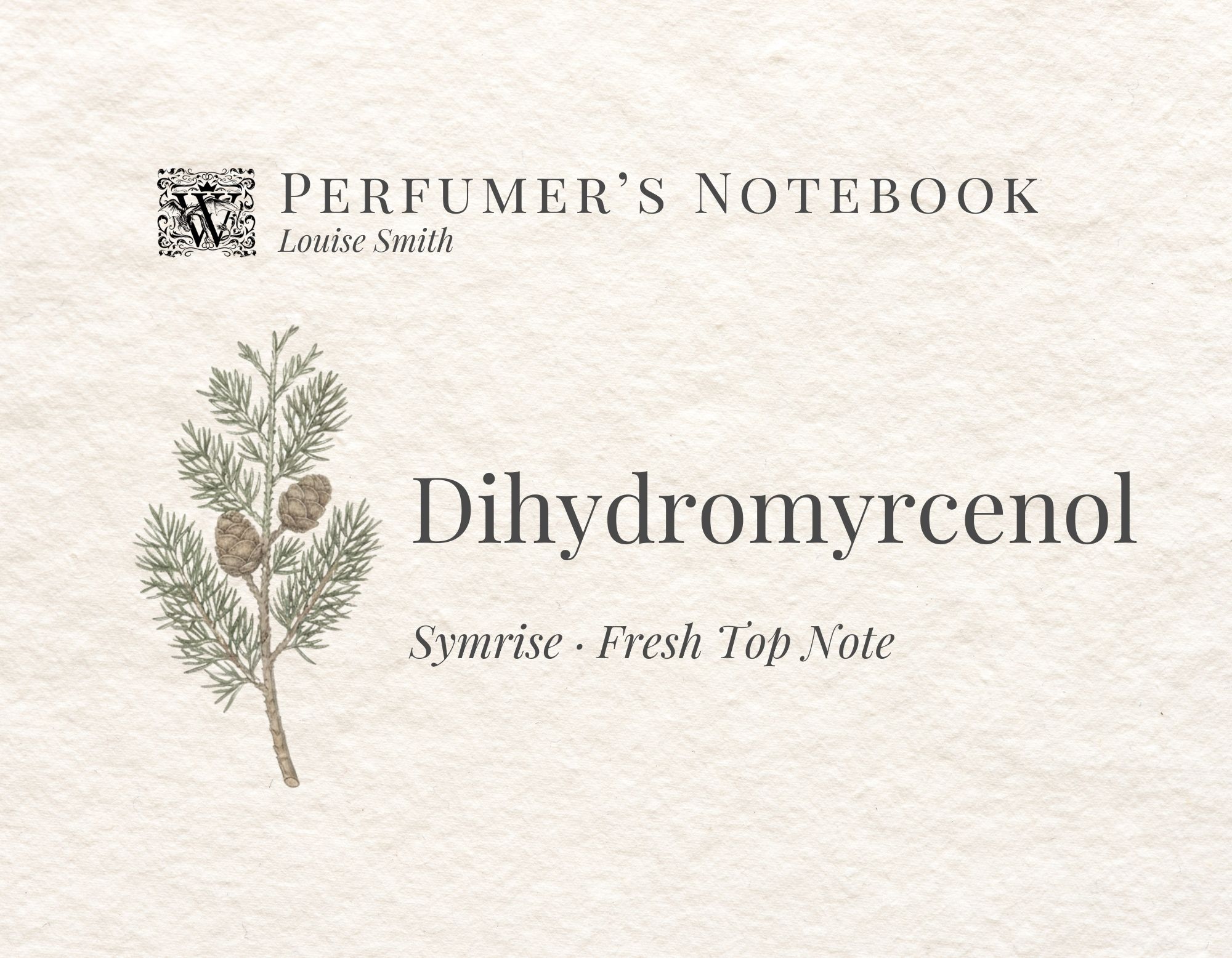
Dihydromyrcenol in Niche Perfumery: The Molecule That Invented Clean
There is a smell that almost everyone knows, even if they have never thought to name it.
It is the smell of freshly laundered linen drying in the air. A citrus-tinged breeze that feels almost blue. Something clean, bright, and just a little bit soapy. Something that makes a space feel lived-in and loved.
That smell, more often than not, has dihydromyrcenol at its heart.
It is one of the most widely used fragrance molecules in the world, and yet very few people outside of perfumery have ever heard of it. I find that fascinating. It is everywhere, hidden in plain smell. And once you know what you are looking for, you will find it in places you never expected.
It is also a material I have used in my own fragrance Coast, and one I genuinely love working with. So let me tell you a bit about it.
At a glance: Dihydromyrcenol in Niche Perfumery
- A synthetic fragrance molecule with no natural occurrence, first developed in the early 1970s and now one of the most widely used ingredients in perfumery
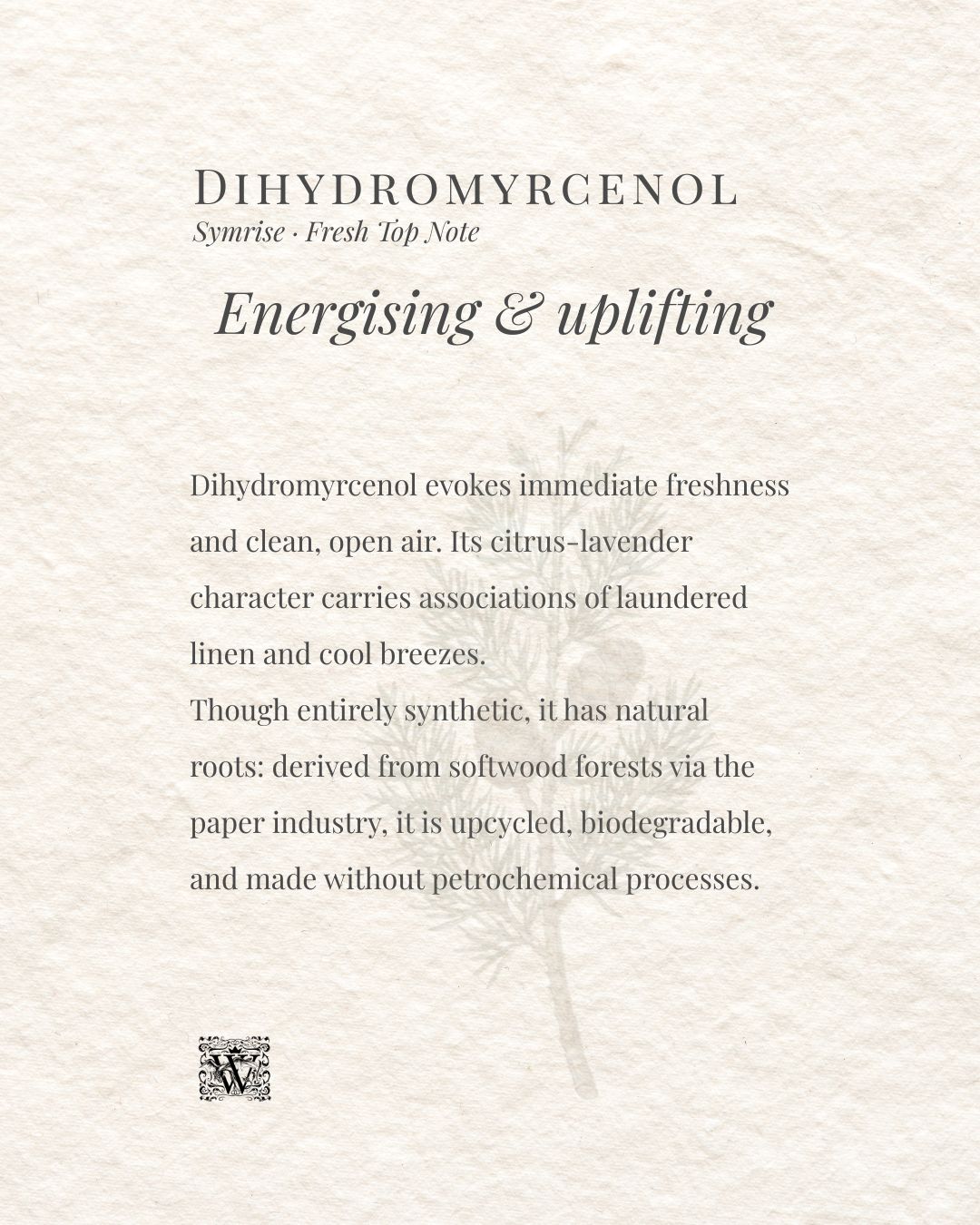
- Smells fresh, clean, and zesty: think lemon, cool air, and a soft lavender-like quality underneath
- Sits between top and heart notes, with a quiet persistence that extends the life of a blend
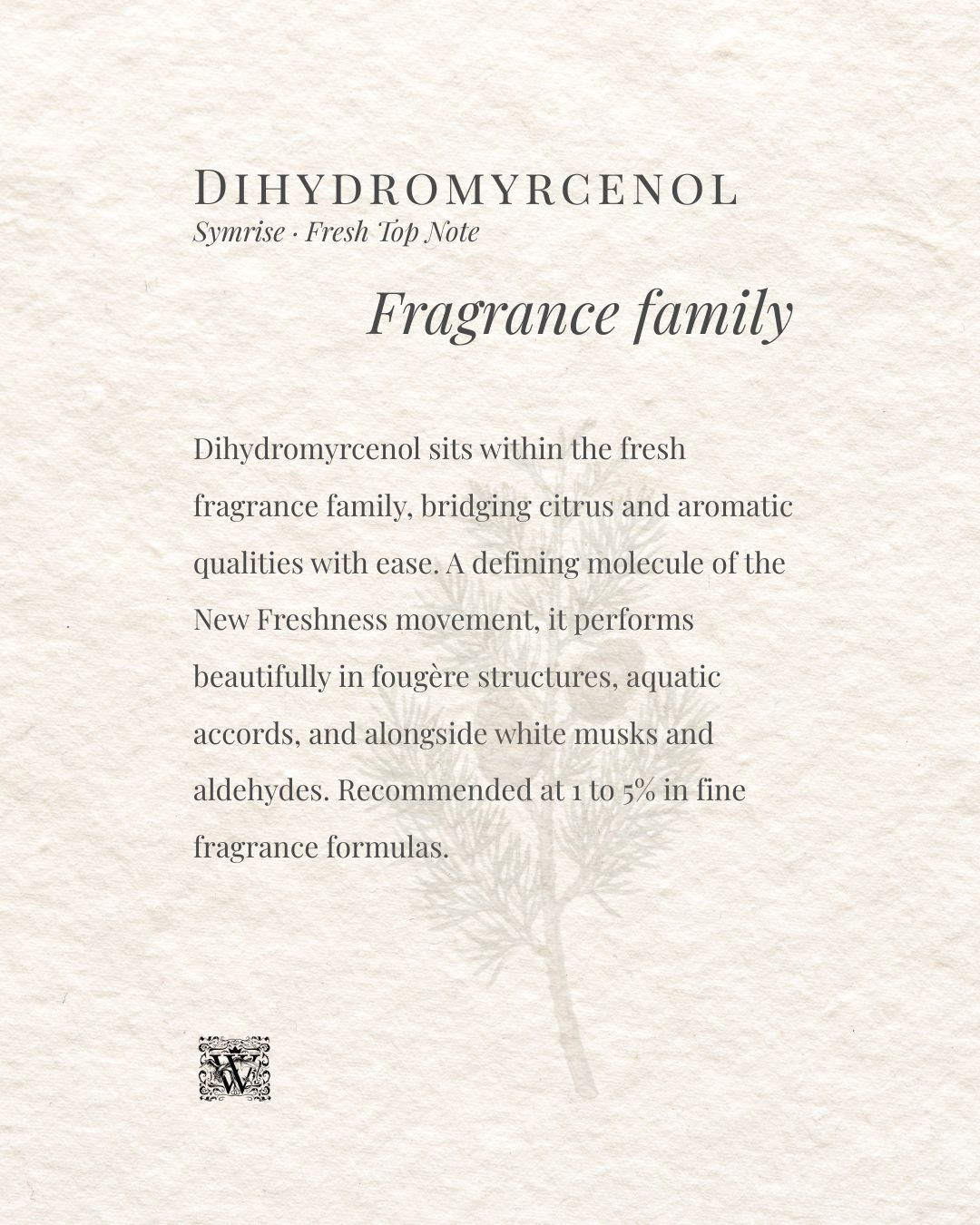
- Works beautifully in fougère structures, aquatic accords, and alongside citrus, white musks, and aldehydes; recommended at 1 to 5% in fine fragrance formulas
- An upcycled ingredient, derived from turpentine, a by-product of the softwood timber and paper industry, and 100% biodegradable
- Used by Louise in Coast, where its clean, airy character felt entirely at home
What is Dihydromyrcenol?
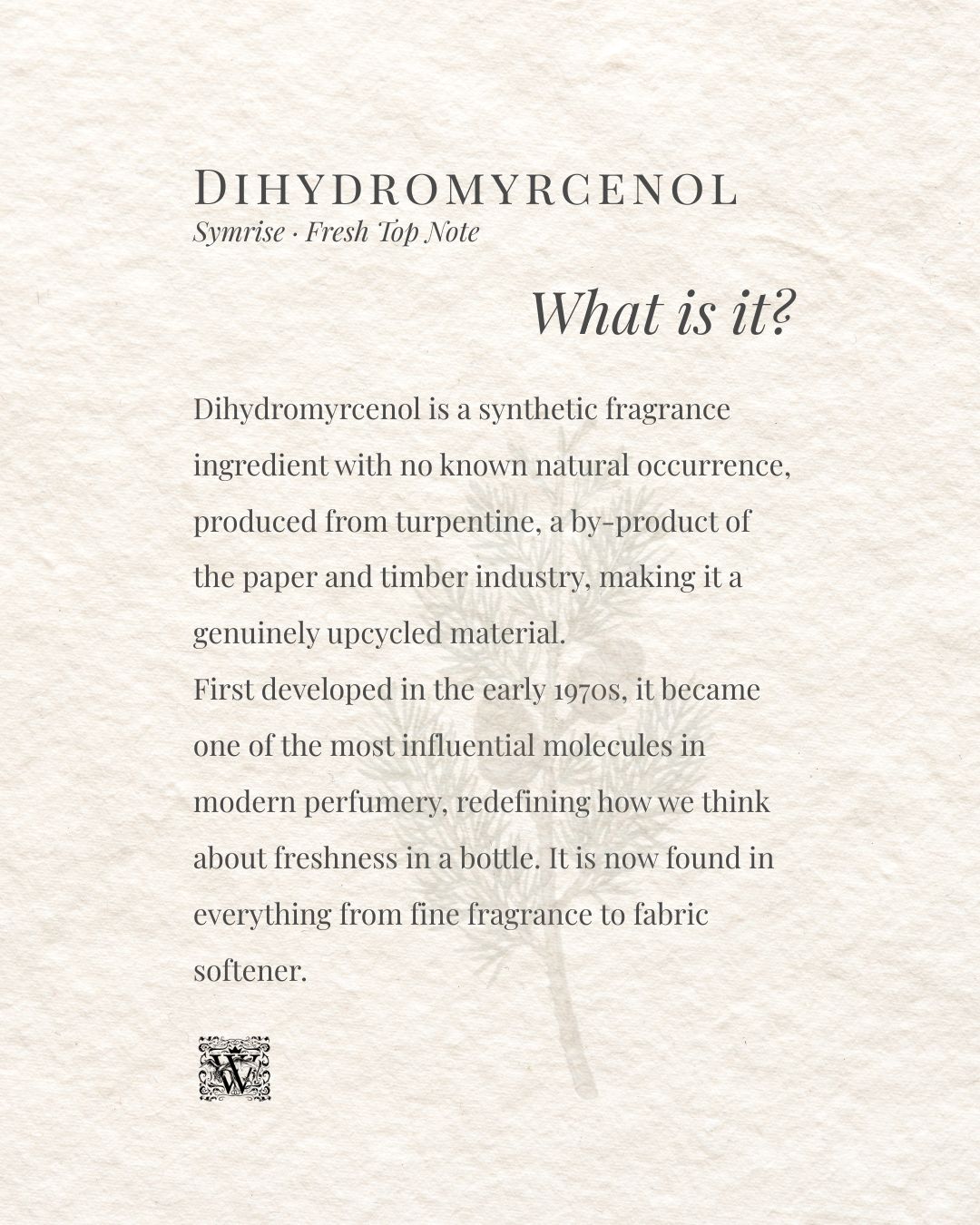
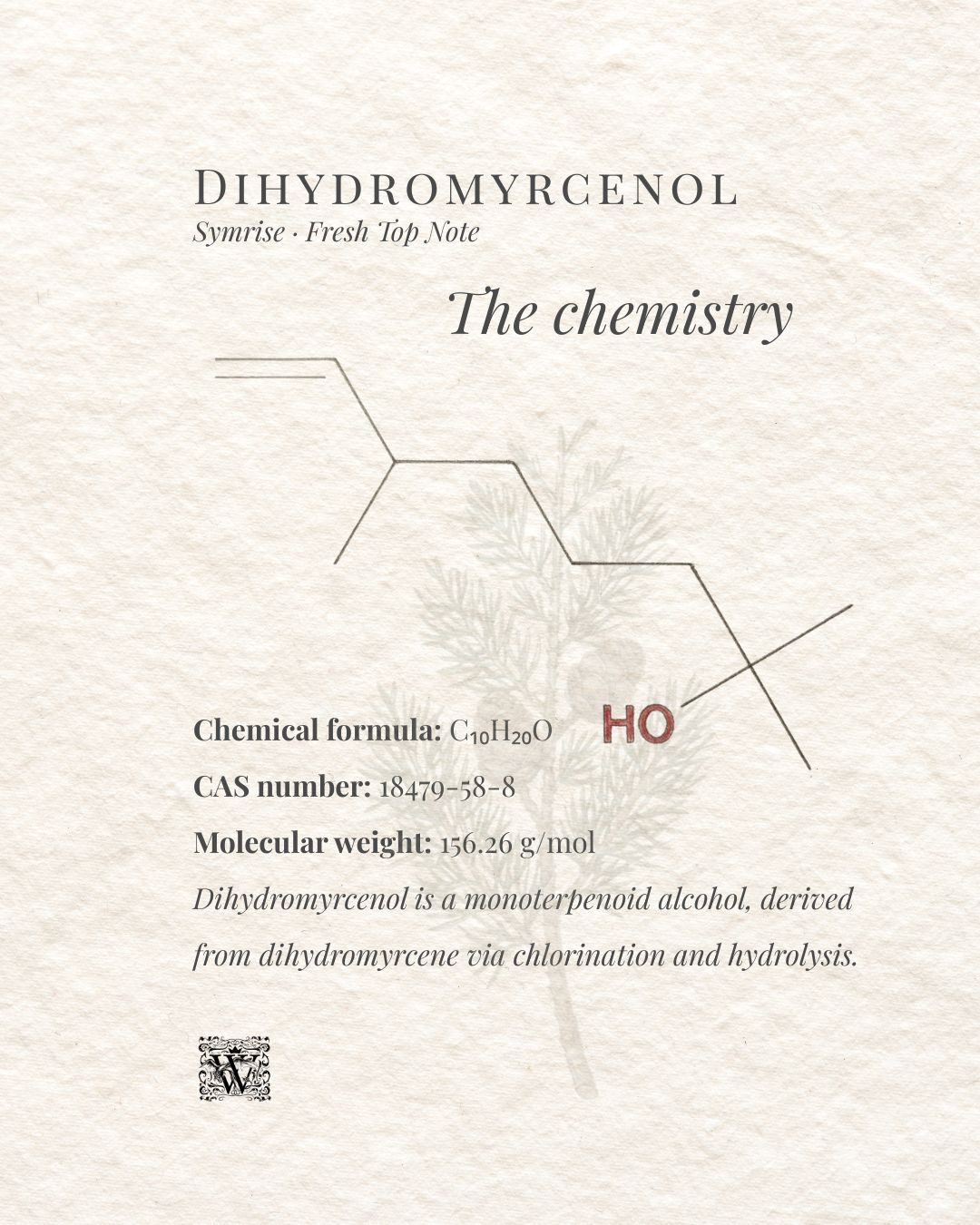
Dihydromyrcenol is a synthetic acyclic terpenoid alcohol, and something of a cornerstone molecule in modern perfumery. It has no known natural occurrence, which makes it one of those ingredients that exists entirely because a chemist imagined it into being.
It emerged in the early 1970s, first developed at IFF, and it changed the way the industry thought about freshness. It was used in some of the most iconic masculine fragrances of that era and beyond, bringing a quality that perfumers at the time called “hygienic freshness” to fine fragrance. Bright, clean, slightly citrus-floral, a little lavender-like. It was genuinely new, and it rewrote commercial scent aesthetics.
Here is something that I love about it though: it is an upcycled material. Dihydromyrcenol is derived from turpentine, a by-product of the paper industry, itself extracted from softwoods. Something that would otherwise be a waste product becomes one of the most vibrant, useful building blocks in a perfumer’s palette. That kind of circularity appeals to me enormously.
What Does Dihydromyrcenol Smell Like?
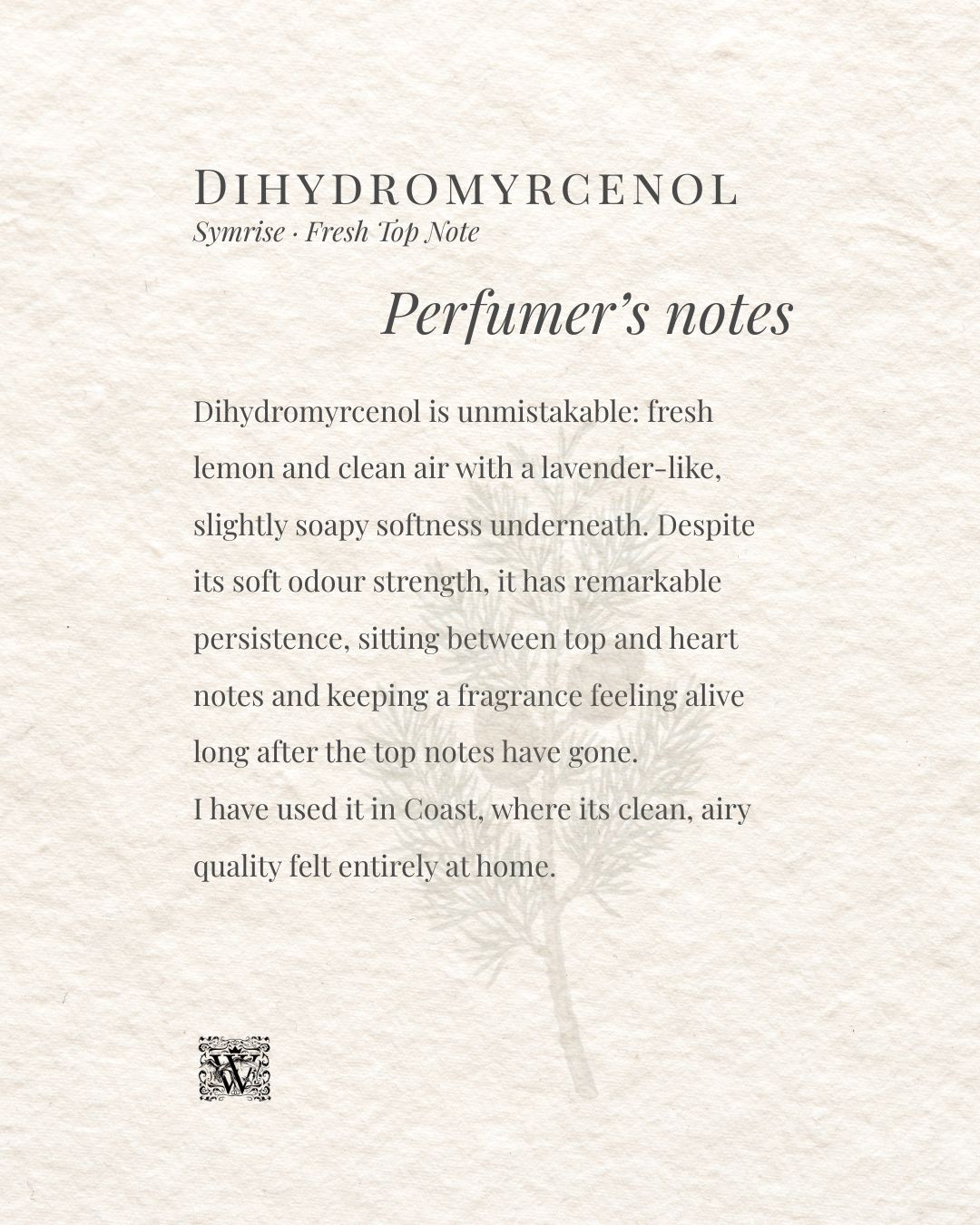
On a blotter, it is fresh, clean, and unmistakably zesty. There is a citrus quality to it, a lemon sharpness that sits alongside something more floral and lavender-like. It is often described as soapy, in the best possible sense: clean linen, cool air, the smell of something that has been properly looked after.
Its odour strength is relatively soft, which surprises people sometimes. It is not a loud, punchy top note that announces itself and then vanishes. It has a quiet persistence. A lingering quality that extends the life of a blend and pulls lighter, more volatile top notes along with it.
That combination of brightness, cleanliness, and staying power is what makes it so endlessly useful.
How I Use Dihydromyrcenol in My Work
I have used dihydromyrcenol in Coast, and it felt like an entirely natural choice for that fragrance. Something about its connection to softwoods and the outdoors, its zesty, airy quality, just suited the brief beautifully.
In blending, dihydromyrcenol sits between top and heart notes. It does not behave like a classic top note that flashes and disappears, nor does it anchor itself in the base. It floats through a composition, lending brightness and openness, making everything around it feel a little cleaner and more alive.
It works particularly well with lavender, citrus materials, white musks, and aldehydes. It is wonderful in aquatic and ozonic accords, and it has an affinity with fougère structures that is almost architectural. Use it at trace and it polishes and brightens. Use it more generously and it becomes the defining character of an entire fragrance.
The one thing to be mindful of is restraint. Use too much and the association with household products and laundry detergents becomes difficult to avoid. The skill is in working with it at levels that feel fresh and alive rather than functional and domestic.


The Sustainability Story
This is a material I feel good about using, and that matters to me as a formulator.
Dihydromyrcenol is derived from turpentine, which is a by-product of the paper and timber industry. It is an upcycled ingredient, making use of something that would otherwise go to waste, and it is 100% biodegradable. Given how widely it is used globally, that biodegradability is not a small thing.
It is not a perfect material in every regard. Like many fragrance ingredients it carries some aquatic toxicity classifications and standard skin contact guidelines apply. But as synthetic ingredients go, it has a genuinely good story: derived from renewable softwood sources, upcycled from an existing industrial process, and fully biodegradable at end of life.
When I am choosing materials for my formulations, I think about where things come from and where they go. Dihydromyrcenol fits comfortably within the values I try to bring to Wales Perfumery.
What Fragrance Family Does Dihydromyrcenol Belong To?
Dihydromyrcenol sits within the fresh fragrance family, with strong citrus and aromatic qualities. It is a defining molecule of what perfumers call the “New Freshness” movement that began in the 1970s and arguably still shapes how we think about clean, contemporary scent today.
It bridges the fresh, citrus, and aromatic families with ease, which makes it a remarkably versatile building block. Whether you are working on a masculine fougère, an aquatic accord, an aldehydic floral, or something lighter and more gender-neutral, dihydromyrcenol can play a role.
It is the kind of molecule that does not draw attention to itself. It simply makes everything around it feel cleaner, brighter, and more complete.
Dihydromyrcenol in Niche Perfumery: Why I Love This Material
There is something wonderful about a molecule that has shaped the smell of everyday life so profoundly and yet remains almost entirely unknown outside of the perfumery world.
Dihydromyrcenol is in fragrances that billions of people encounter every single day. It is in the washing powder, the shower gel, the cologne your father wore in the 1980s. It helped to create an entirely new olfactory vocabulary around cleanliness and freshness that we now take for granted.
And yet here it is, derived from the softwood forests of the paper industry, upcycled and biodegradable, doing some of the most beautiful and enduring work in modern scent.
That is the kind of material story I love sharing. Once you know what dihydromyrcenol smells like, you will find it everywhere. And once you understand where it comes from, it will smell just a little bit more interesting every time.
Louise Smith
from my Perfumer’s Notebook
I regularly share insights from my perfumer’s notebook on Instagram. Behind-the-scenes glimpses from the lab, ingredient deep dives, and the stories behind our fragrances. If you enjoyed getting to know dihydromyrcenol, there is plenty more to explore about the materials I work with every day.
Come and follow along as I continue exploring the art and science of perfumery. I’d love to connect with you there and hear about your own fragrance discoveries.